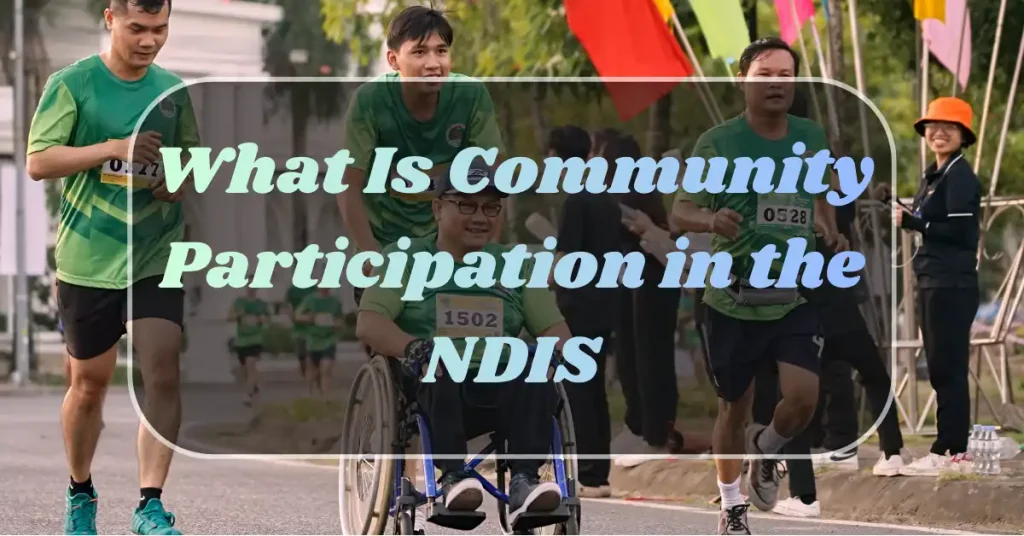
Community participation in the NDIS means getting involved in social, recreational and community activities with the support you need because of your disability. This can include joining a local sports group, attending a class, visiting friends, volunteering, going to community events, or building skills that help you take part more independently.
I wanted to write about this because I often see people asking what “community participation” actually means in an NDIS context. The term sounds simple, but it can be confusing when you are trying to understand your plan and what your funding can be used for. I have based this guide on current NDIS information and guidelines, along with the questions people commonly ask about community participation. This article is for NDIS participants, families, carers and anyone helping a participant understand social and community participation supports.
Table of Contents
What does community participation mean in the NDIS?
The NDIS describes social and community participation as taking part in activities with other people and building connections within your community.
It can look different for everyone.
For one person, it might mean going to a local café once a week. For another, it could mean joining a football club, attending an art class or volunteering.
Examples include:
- Going to a local community centre
- Joining a sports or recreation group
- Attending a music, art or craft class
- Meeting friends or family
- Going to the cinema or a community event
- Volunteering
- Getting work experience
- Learning social or communication skills
- Building confidence to use community facilities independently
The NDIS says these activities can help people build relationships, confidence, independence and social networks.
What NDIS community participation support can include
If your disability means you need extra support to participate, your NDIS plan may fund that support when it meets the relevant funding criteria.
For example, you may need a support worker to help you attend an activity safely, develop skills, or become more independent.
Depending on your circumstances and plan, support could include:
- A support worker accompanying you to a community activity
- Help developing skills needed to participate
- Support to attend a class or group
- Assistance with getting to an activity when appropriate
- Support to build confidence and independence
- Help using specialised equipment needed because of your disability
The NDIS currently lists “Assistance with social and community participation” as one of the support categories that can sit within Core Supports.
It is important to understand the difference between paying for support and paying for the activity itself.
For example, the NDIS may fund disability-related support to help you attend a community activity. You generally still pay ordinary costs that everyone pays, such as membership fees, entry fees or standard equipment.
How community participation can support your NDIS goals
Community participation should have a clear connection to what you want to achieve.
For example, imagine your goal is to become more independent when going out.
You could work towards this by starting with a support worker accompanying you to a weekly community class. Over time, you might work on planning the trip, communicating with other people, managing your belongings and eventually attending with less support.
Another person may have a goal around making friends. A regular social group could give them opportunities to meet people with similar interests.
The activity itself is important, but so is what you are working towards through the activity.
NDIS research found that participants linked community participation with greater connection, larger social networks, increased confidence and opportunities for further participation, employment or study.
Does the NDIS pay for community activities?
Usually, the NDIS does not pay the ordinary cost of an activity simply because you have an NDIS plan.
The key question is whether the support you need is related to your disability and meets the NDIS funding requirements.
For example, you may pay the membership fee for a local sports club yourself. If you need disability-related support to participate, that support may be considered separately.
The NDIS also considers factors such as whether the support helps you pursue your goals, is value for money, is effective and beneficial, and meets other funding requirements.
Funding is not automatic. Having a community participation goal does not mean every related expense will be funded.
How to choose the right community participation support
Start with what you actually want to do.
Ask yourself:
- What activities do I enjoy?
- What would I like to try?
- What stops me from participating independently?
- What skills would I like to develop?
- Do I need support with communication, transport, planning or safety?
- Would I prefer individual or group activities?
- What support do I already receive from family, friends or my community?
You can then discuss these needs with your support coordinator, NDIS planner, Local Area Coordinator or provider.
The NDIS also recommends looking for providers who listen to your interests, understand your goals and have experience supporting people with disability to participate in community activities.
Community participation should be about your choices
There is no single version of community participation that works for everyone.
You do not have to join a sports club because someone else enjoys it. You do not have to attend a large group if you prefer smaller activities.
Your interests can also change.
You might start with one activity for 30 minutes each week and increase your participation as your confidence and skills develop.
The important thing is that the support has a clear purpose and helps you work towards your own goals.
FAQs
What is an example of community participation in the NDIS?
An example is attending a weekly art class with a support worker because your disability makes it difficult to participate independently. The support may help you build confidence, communication and community participation skills.
Can NDIS fund a support worker for community activities?
Yes, the NDIS may fund a support worker when the support is related to your disability, helps you pursue your goals and meets NDIS funding requirements. It does not mean the NDIS will automatically fund every community activity or related expense
Can community participation help with independence?
Yes. Community participation can help you develop practical and social skills that support greater independence. The type and amount of support you need will depend on your individual goals and circumstances.